

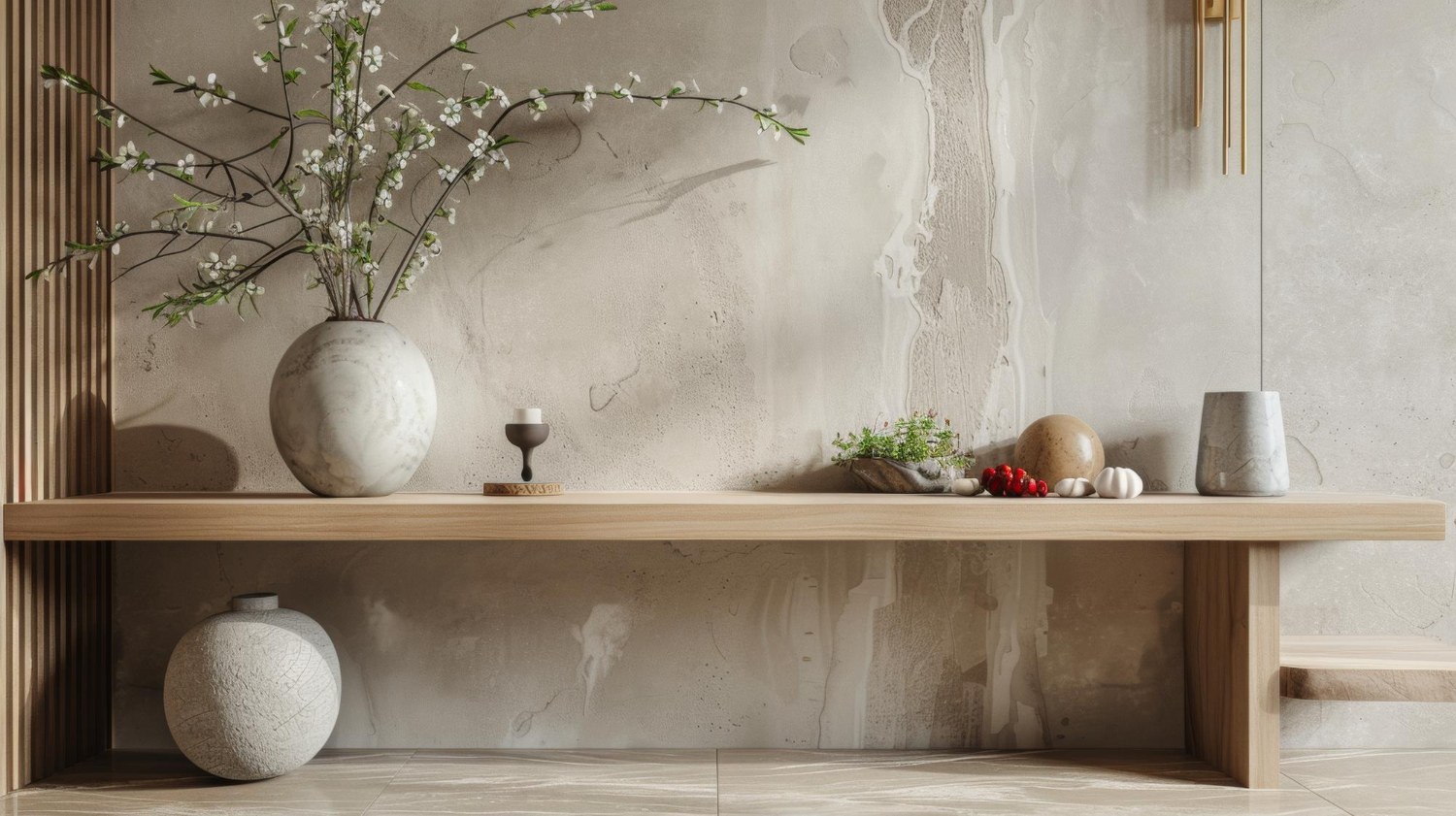
The Fusion of Japanese Minimalism and Scandinavian Comfort
 Japandi interior design is a sophisticated blend of two distinct but complementary design styles: Japanese minimalism and Scandinavian functionality. This unique hybrid approach combines the serene elegance of Japanese design with the cozy, functional simplicity of Scandinavian aesthetics, resulting in interiors that are calm, warm, and thoughtfully arranged. Both of these design philosophies share a love for minimalism, natural materials, and a sense of calm, but they approach these concepts in slightly different ways, making their fusion in Japandi interior design an ideal marriage of form and function.
Japanese design has long been admired for its clean lines, use of natural materials, and the creation of spaces that promote peace and mindfulness. It often revolves around the principles of “wabi-sabi,” a concept that embraces imperfection and the beauty found in simplicity. Natural elements like wood, stone, and bamboo are prominent, helping to bring the outside world into the home, which fosters a connection with nature.
Scandinavian design, on the other hand, is known for its focus on comfort and practicality. It emphasizes a cozy atmosphere known as “hygge” and embraces light, airy spaces with neutral color palettes. Functionality is key in Scandinavian interiors, where each piece of furniture or decoration serves a purpose while still being aesthetically pleasing. By blending these elements, Japandi interior design manages to strike a perfect balance between warmth and simplicity, offering a calm yet inviting living space that feels both modern and timeless.
Achieving Balance in Japandi Interior Design
 One of the core principles of Japandi interior design is the careful balance between aesthetics and practicality. In a world where clutter often reigns, Japandi offers a reprieve through its minimalist approach, yet it never sacrifices comfort or functionality. To achieve this, one must carefully curate furniture and décor to ensure that every item not only enhances the visual appeal of the room but also serves a clear, functional purpose. This is one of the areas where the Scandinavian influence shines through, as every piece of furniture should be comfortable and useful.
Color schemes in Japandi interiors are typically neutral, with earthy tones like beige, gray, and soft whites dominating the palette. These muted hues allow the natural materials, such as wood and stone, to stand out, creating a sense of warmth and calmness in the room. Subtle splashes of darker tones, often inspired by Japanese design, may be used to add contrast and depth, ensuring the space doesn’t feel too sterile or monotonous.